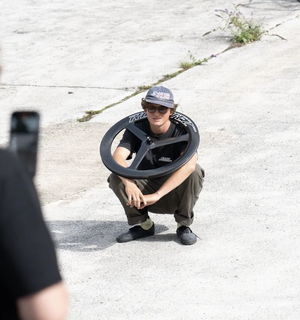
One of my favorite things about being in big cities is the chance of running into the OGs. The people who were traveling the world long before you were even born, doing absolutely rad things like judging skateboarding competitions across the globe. Every now and then, you get that rare kind of pull: you meet someone who is simply a well of knowledge and stories, and who wouldn’t love that?
On a random ride with some friends, I met Watarude-san, casually rolling on his carbon 3Rensho, already an impressive sight on its own. Add in the fact that he uses it as his daily bike and has converted it to promenade bars. So it was clear I had to get his contact information for the day I could return and photograph such an interesting machine.
Apparently, this carbon 3Rensho was produced by Araya, though in a world where Japanese archives are scarce, nothing is certain. There were also reportedly just under 100 of these made, which makes it all the more special, and well worth documenting here.
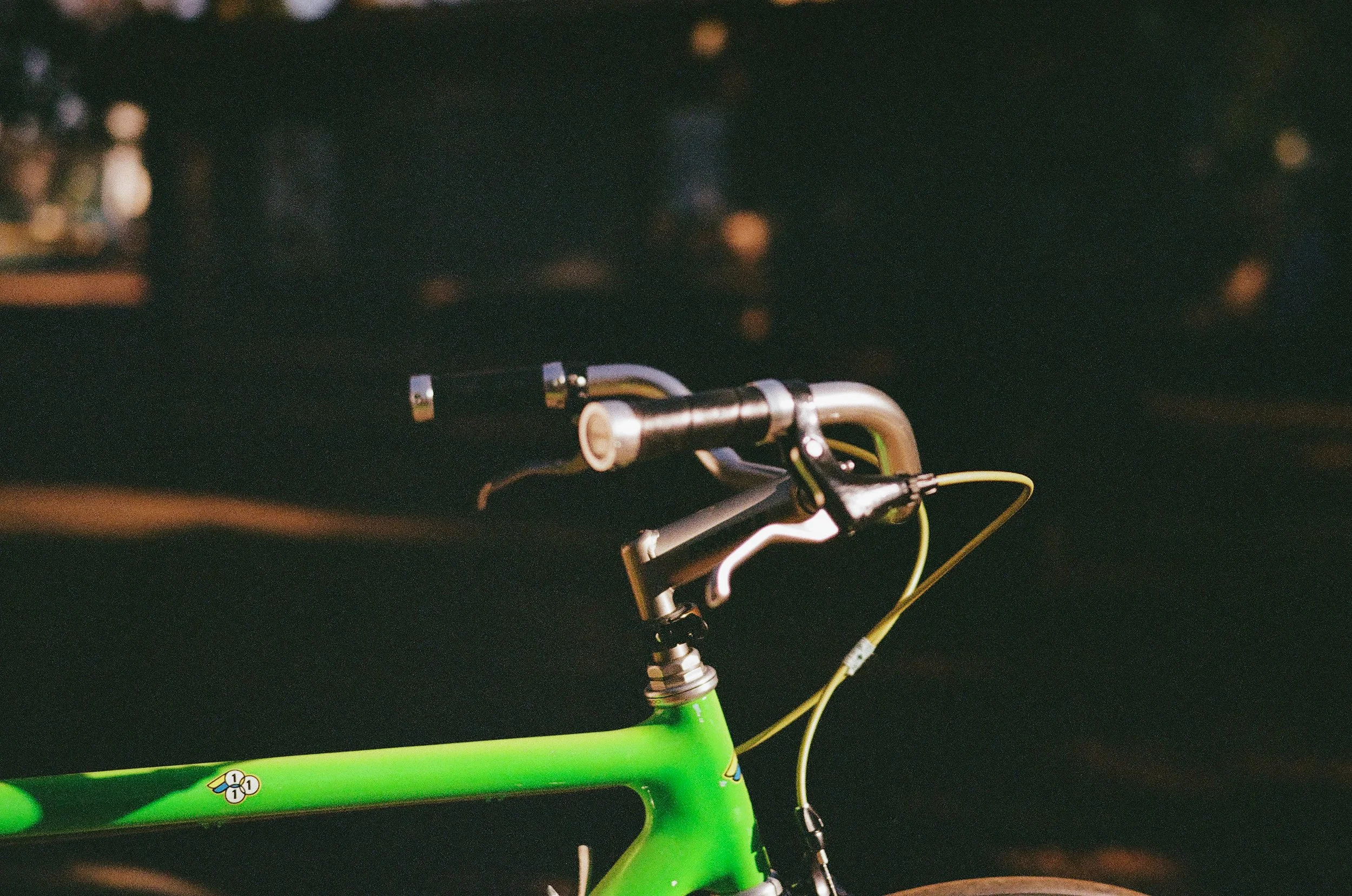
Beyond the mysterious story of the 3Rensho carbon monocoque, a rabbit hole that is as fascinating as it is enigmatic, the real appeal lies in the simple, tasteful way this top-tier race bike has been turned into a do-it-all commuter. It starts with the cockpit: a Profile quill stem paired with a carbon 1-inch fork, topped by the Nitto B602AA promenade bar, one of the Japanese manufacturer’s longest-running models, and finished with Brooks leather grips.
Detailed Parts List
Frameset
Carbon Monocoque 3Rensho
Groupset Shimano Dura Ace
Crank Shimano Dura Ace Double
Seatpost and Saddle
Tomson Elite, San Marco Aspide
Stem and Handlebar
Profile quill stem, Nitto B602AA Bar
Wheels
Shimano RH500
The original bike came with a Shimano 600 groupset, which Watarude-san later upgraded to Dura-Ace, while also replacing the aero wheels with something lighter, more affordable, and still visually distinctive: the Shimano RH500. If you recently read my review of the Rolf Prima FX, you’ll know that low-spoke-count wheels are right up my alley.
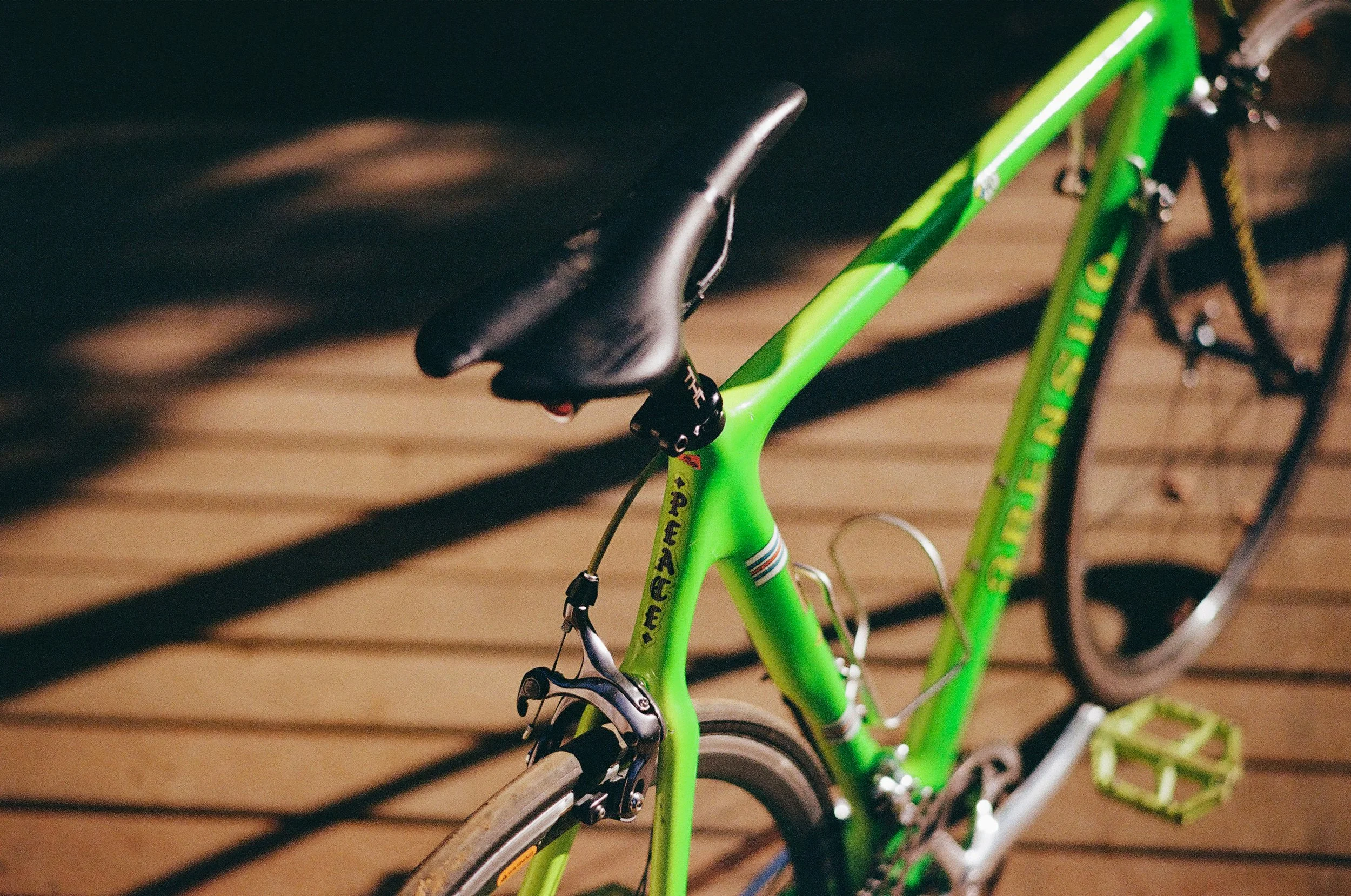
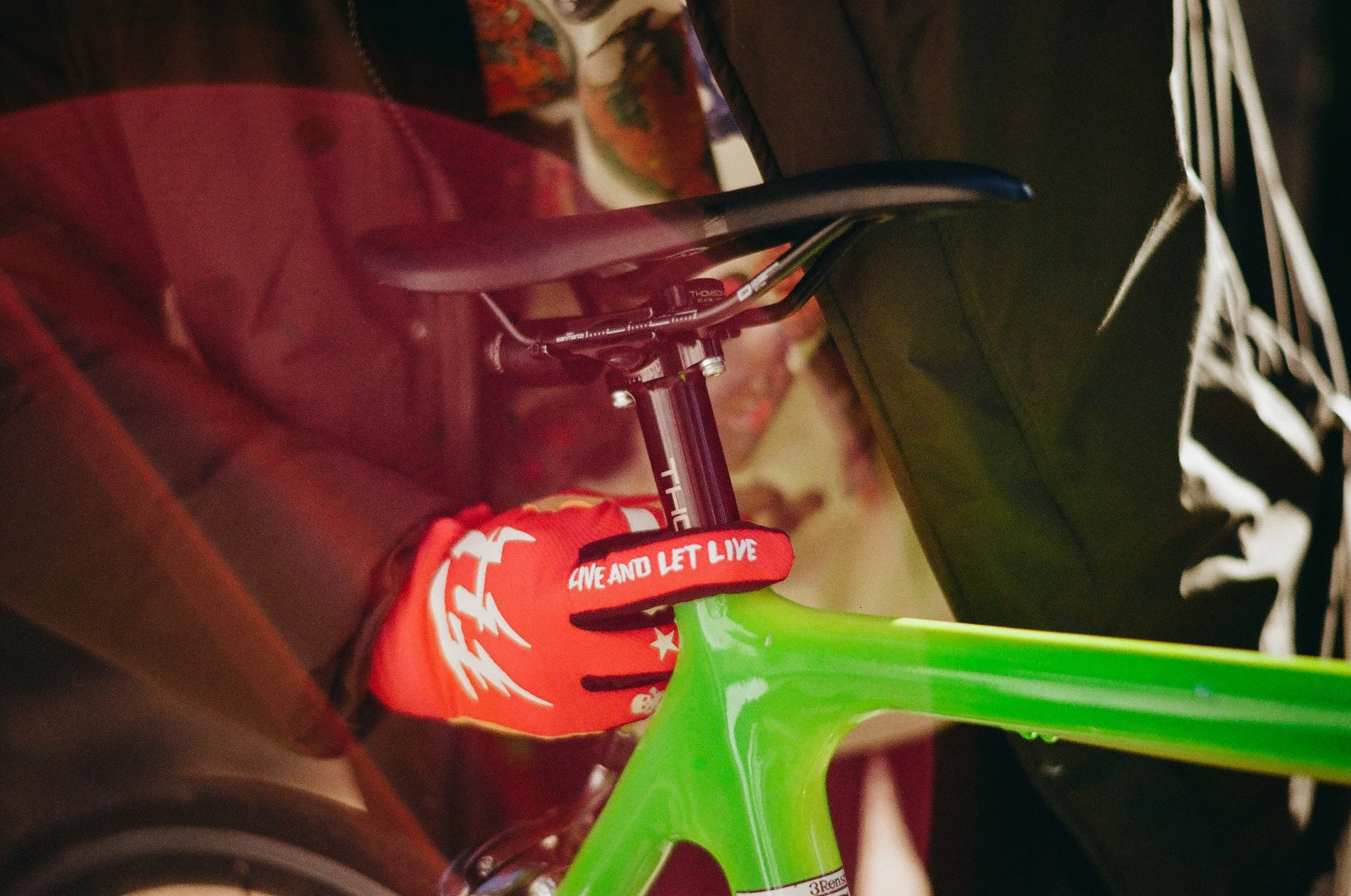
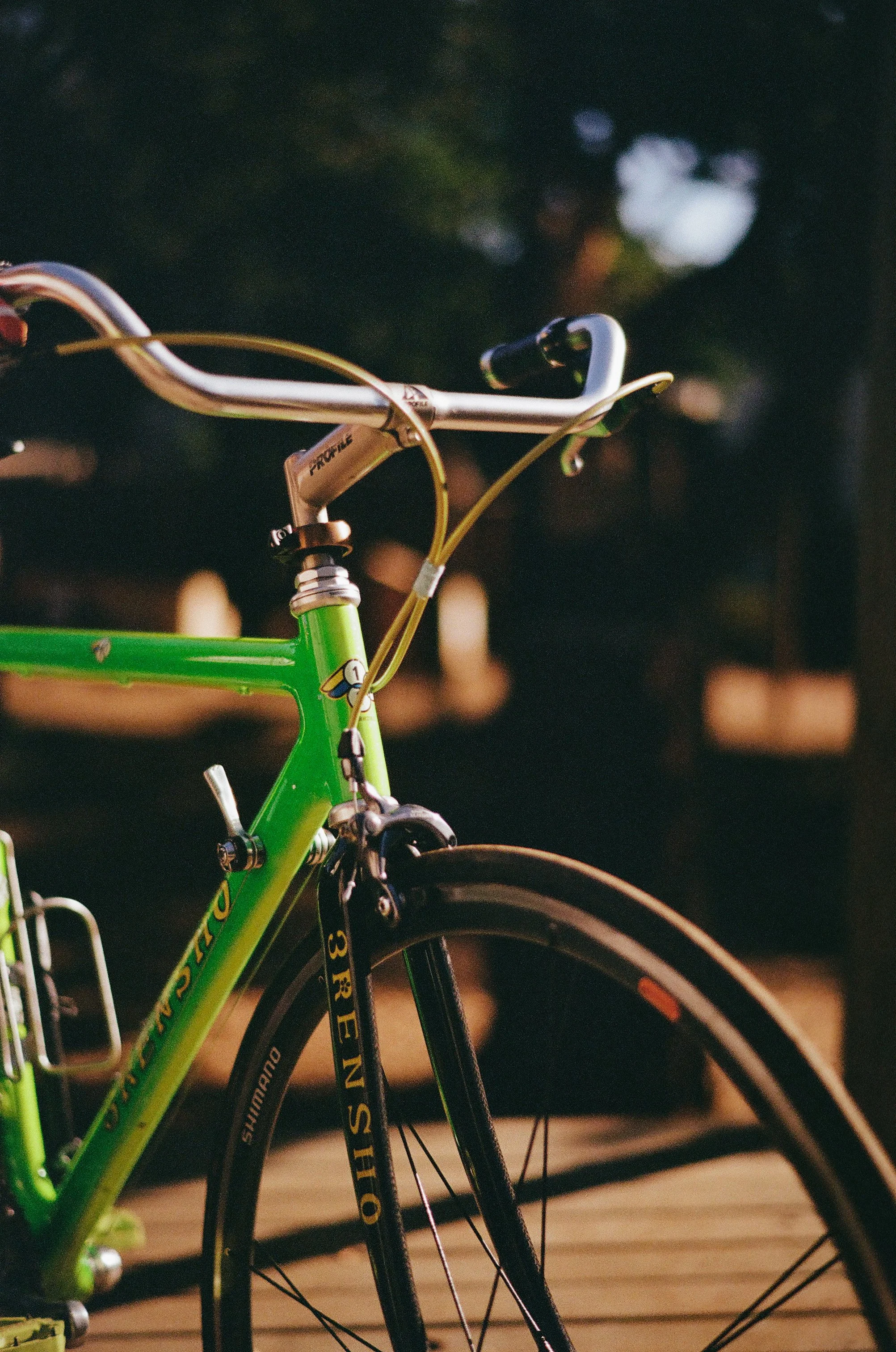
Building a commuter on the base of a legendary frame is always a power move, and when it’s done with taste, it usually ends up looking incredible. You keep the soul of the original bike but give it a second life that feels practical and personal. It also gives the bike a kind of quiet aura, the sort that comes from knowing exactly what to keep and what to change. Something special!
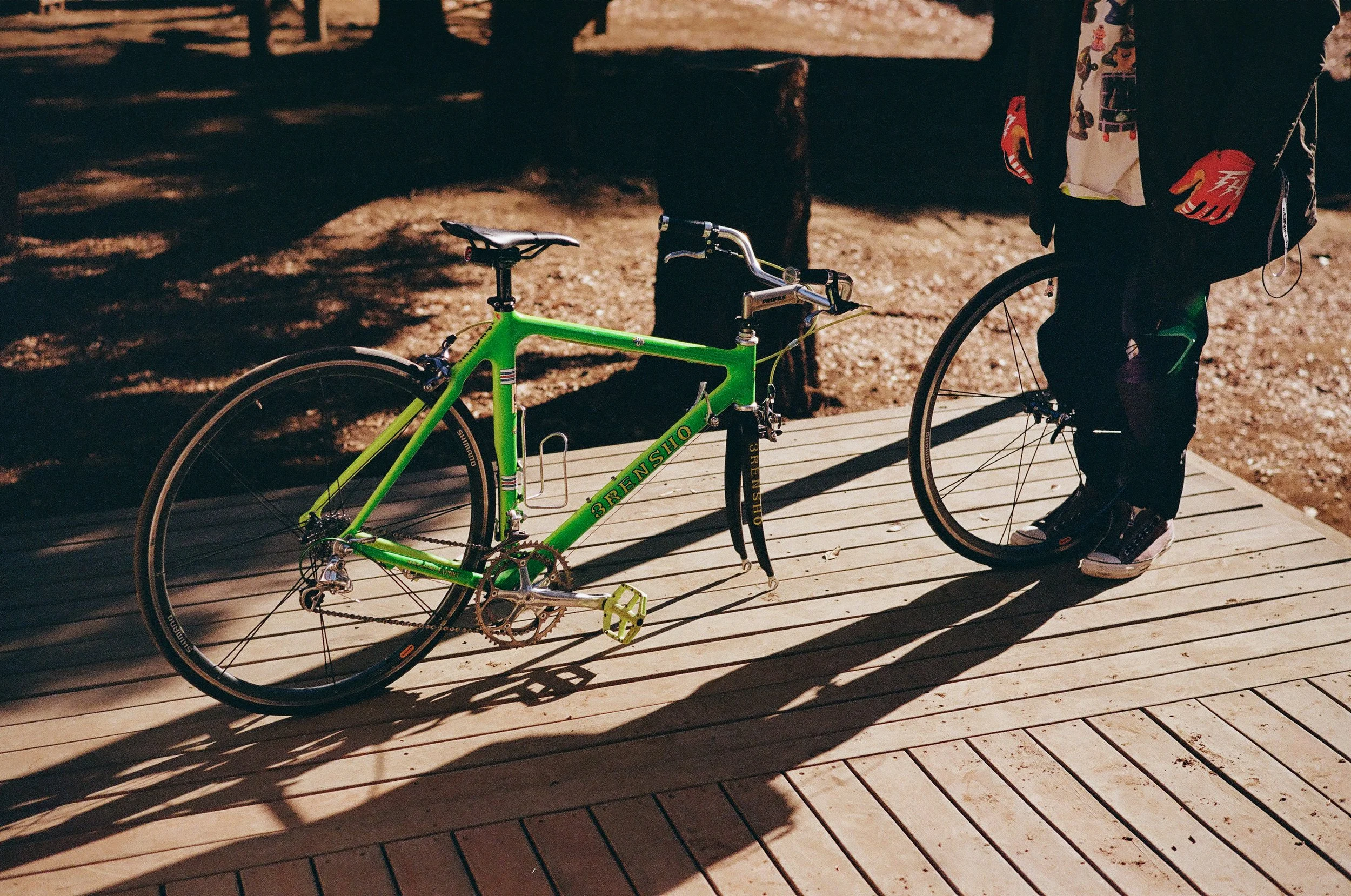
I might need one…
🎞: Kodak Color Plus 200
📷: Leica M6
📍: Tokyo