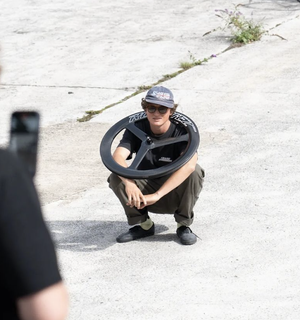
I ramble to my friends quite a lot about how some days working on Slow Spin Society make me feel like this is the best thing I’ll ever do. Those are the days when I get to be surrounded by incredibly talented people who, in my eyes, are truly bringing something meaningful to the cycling sphere. Today, I’d like to share the first steps in creating a fully custom Moga System bikepacking set for my Weis gravel bike, a project that simply doubles down on just how good this bike can look.
First things first, who, and what, is Moga? Founded a couple of years ago by George, better known as MOGA, MOGA Bags has been steadily carving out its own place within the niche world of bikepacking bags. And while there’s certainly no shortage of talented makers out there, all creating incredible bags and bringing their own approach to the craft, I found myself genuinely connecting with George and his work for a few different reasons. The first, and probably the most obvious one, is that George also comes from track bikes, which, in my book, is already a pretty strong starting point. There’s a certain eye for detail, restraint, and aesthetics that often comes from that scene, and you can clearly feel it in the way Moga approaches bag design. But beyond that, he has also been consistently pushing the boundaries of what’s possible with minimalist patterns, X-Pac fabrics, and fully custom-made bikepacking bags.
What I particularly appreciate is how his work manages to sit somewhere between technical functionality and a very refined visual language. The bags feel purpose-built and practical, but not over-designed or overly complicated. There’s a real understanding of shapes, proportions, and how a bag can complement the lines of a bike rather than simply being attached to it. And for a project like my Weis gravel build, that balance felt especially important.
Based in Brussels, I’ve now had the chance to visit George’s workshop twice. The first time was simply to sit down and discuss the project, exchange ideas, and figure out the overall direction we wanted to take with the bags. The second visit was for the final delivery: installing the full setup onto the bike and bringing the whole concept to life.
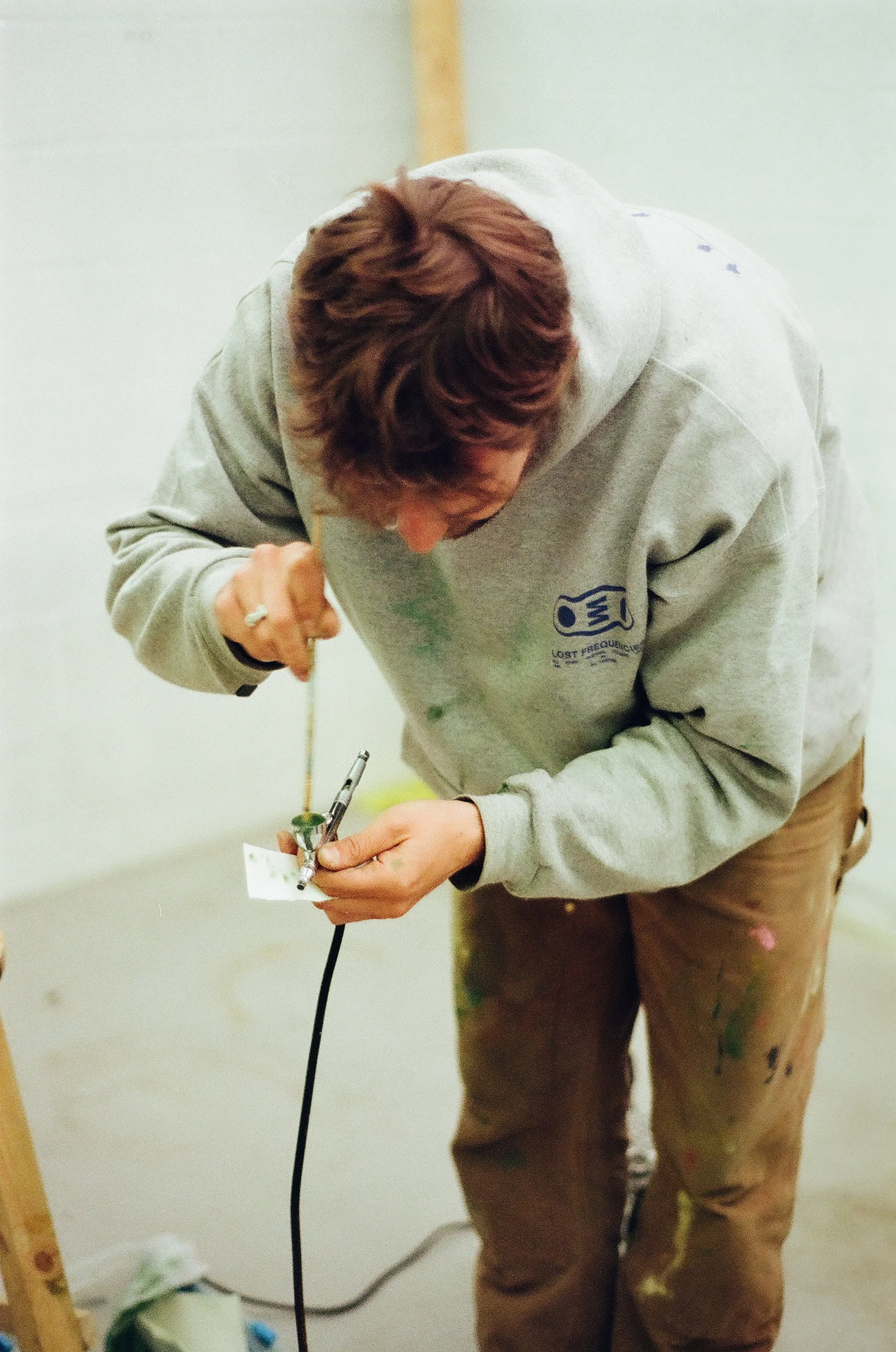
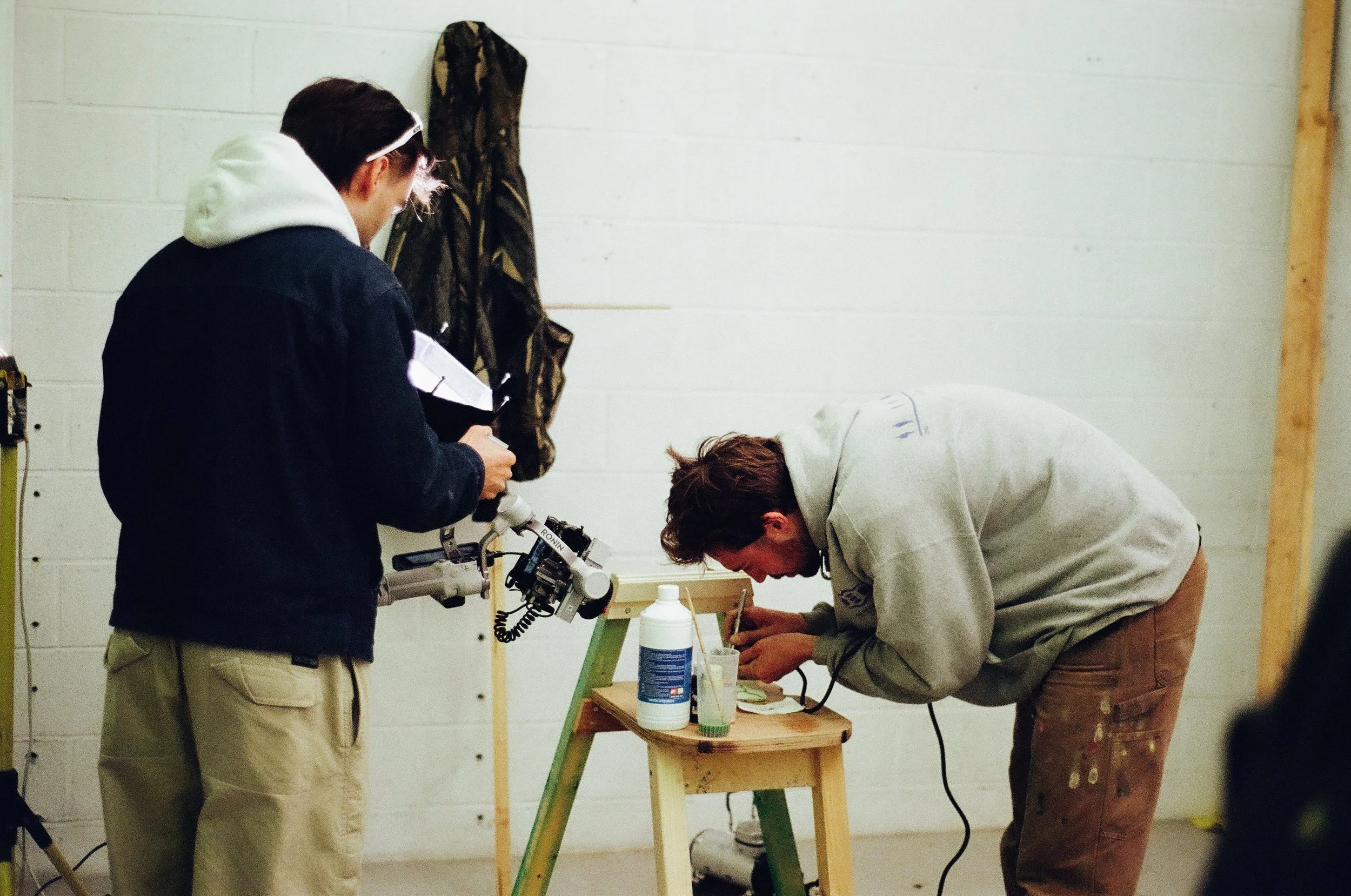
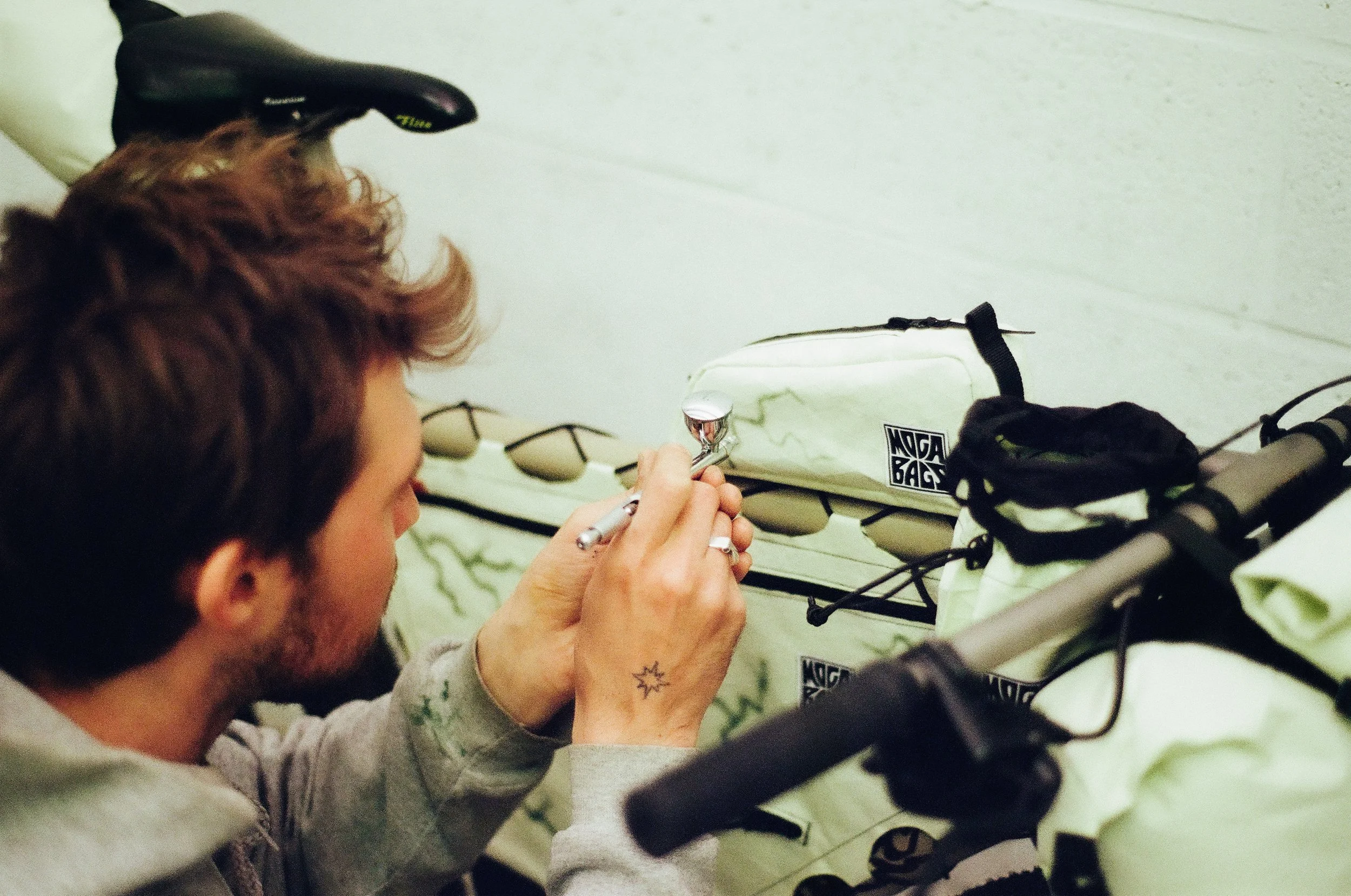
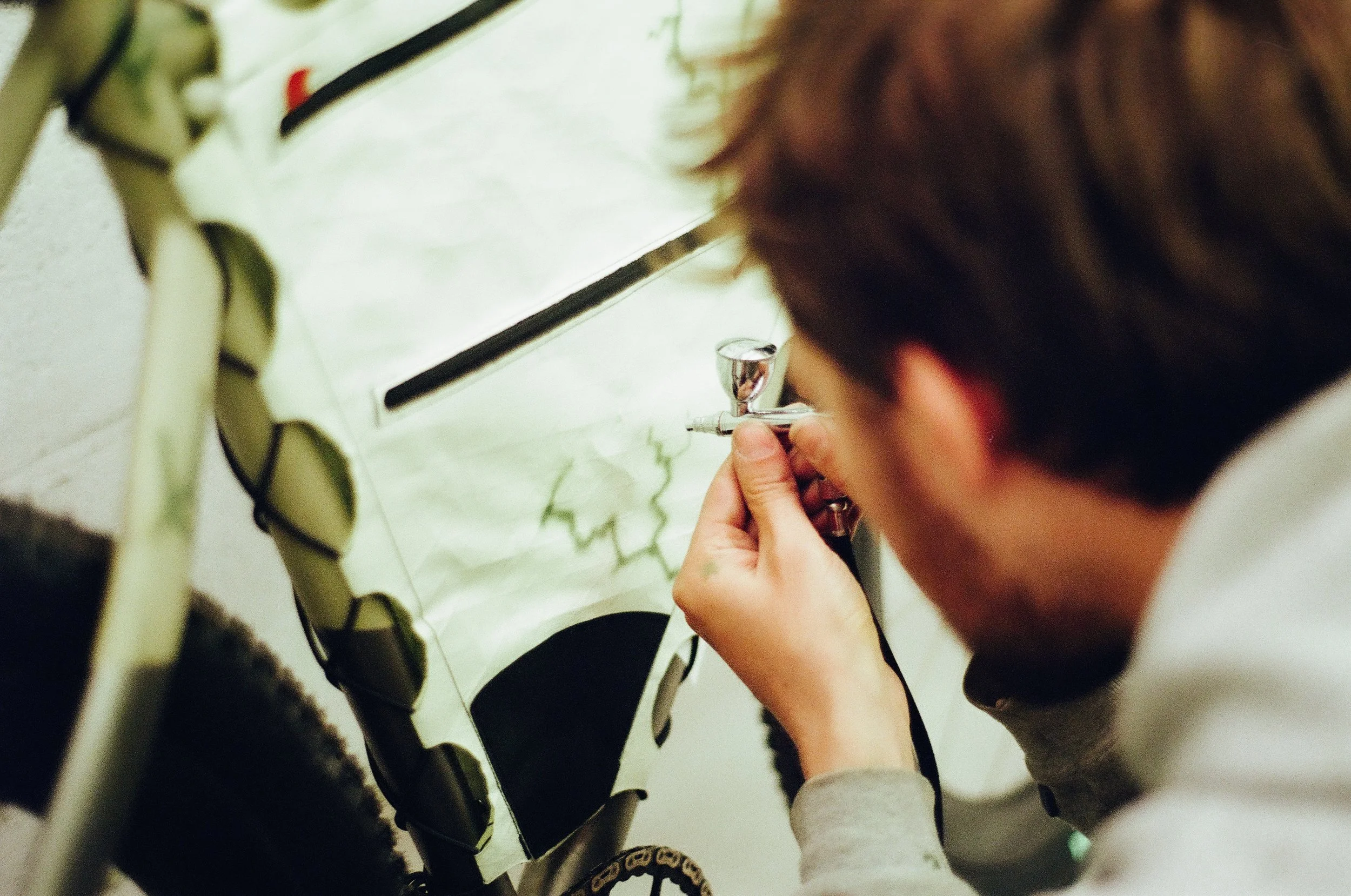
That second session also became something a little more special, as we invited Lou, a local emerging artist, to hand-paint the bags using an airbrush. The idea was to visually connect the bags to the existing paint patterns already present on my Weis frame, almost extending the frame design directly onto the fabric itself. The result is something that feels cohesive, but more importantly, completely unique. It could have simply been a bikepacking setup added onto a bike, but we decided to do something that genuinely feels integrated into the build as a whole.
And honestly, the timing could not have been better. We ended up finishing the entire setup only a few days before my trip to Japan with the Weis team, which also became the perfect first real-world test to see just how much I could actually fit into these bags.
Because, long story short, traveling with a fully integrated gravel cockpit and a 740mm-wide handlebar that cannot be removed is… not exactly the easiest thing in the world. I technically had a bike box that fit airline requirements, but not one that would fit in the train or in a regular cab.
But, instead of panicking, I basically decided to fully commit to the new setup. I packed nearly three weeks’ worth of clothes, camera gear, and various other knick-knacks directly into the bags, removed only the pedals and both wheels, slammed the bike into a cargo bike cardboard box, and then spent a good few minutes politely begging the lady at the check-in counter to let me board the plane with it.
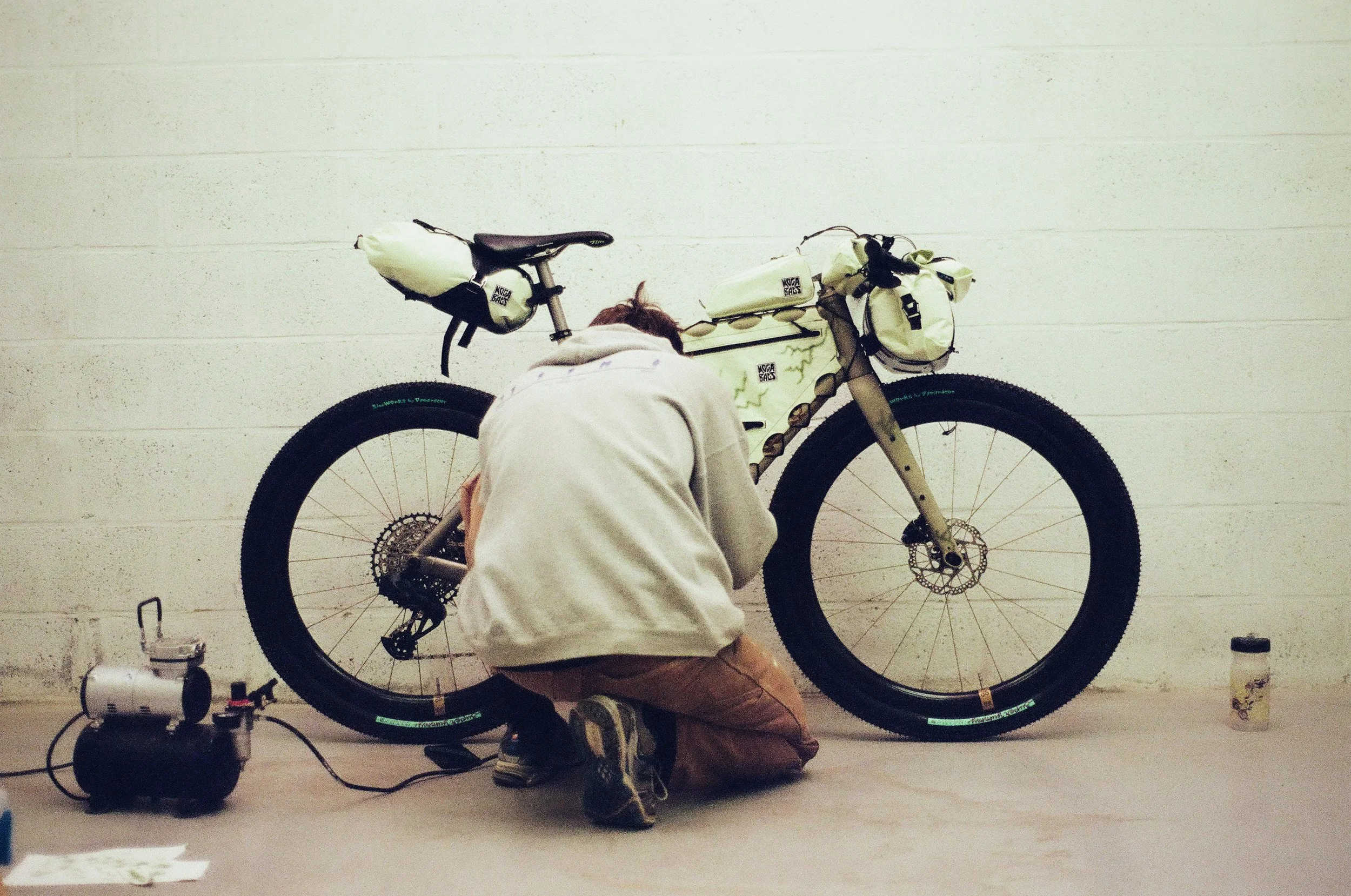
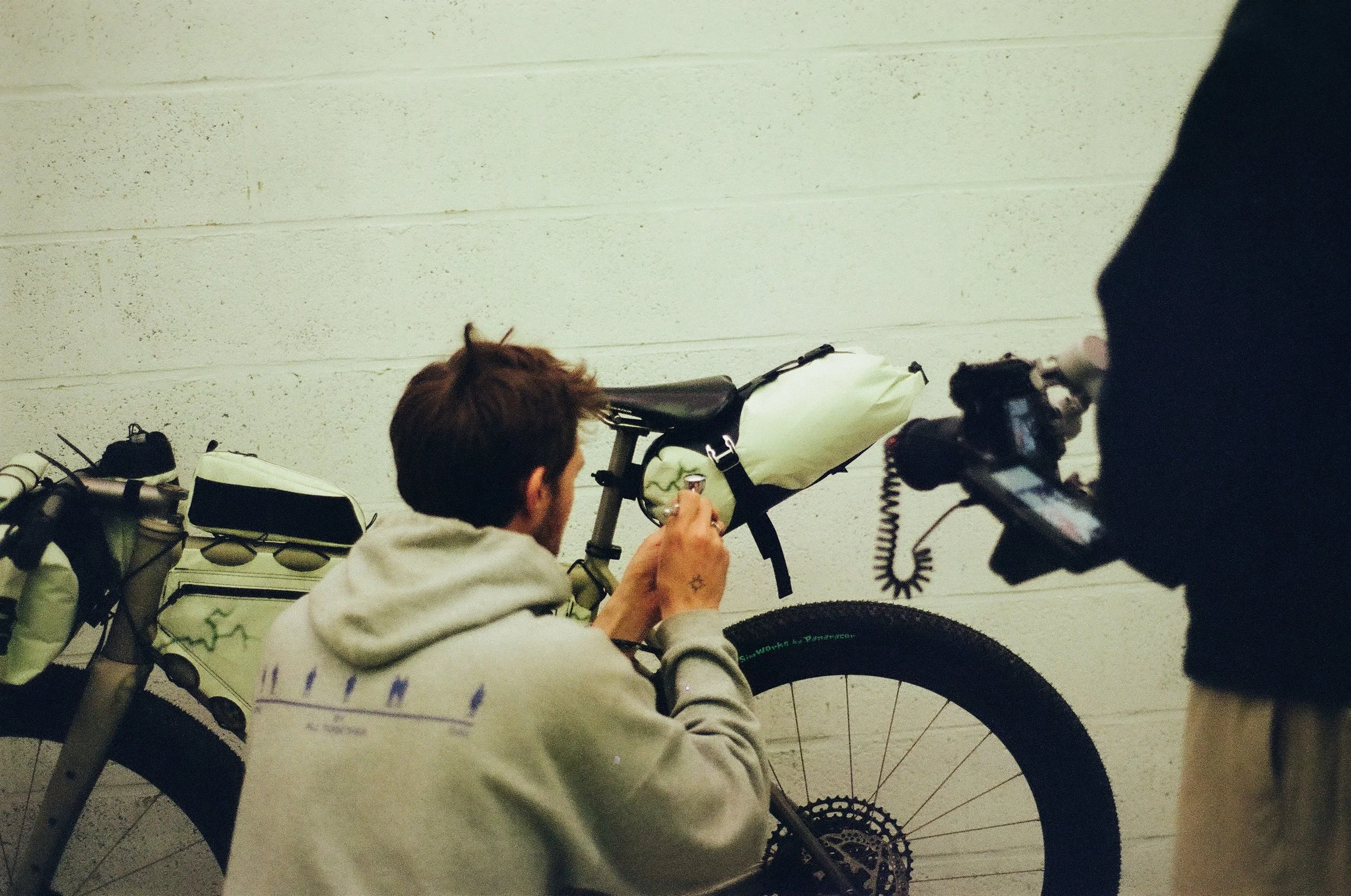
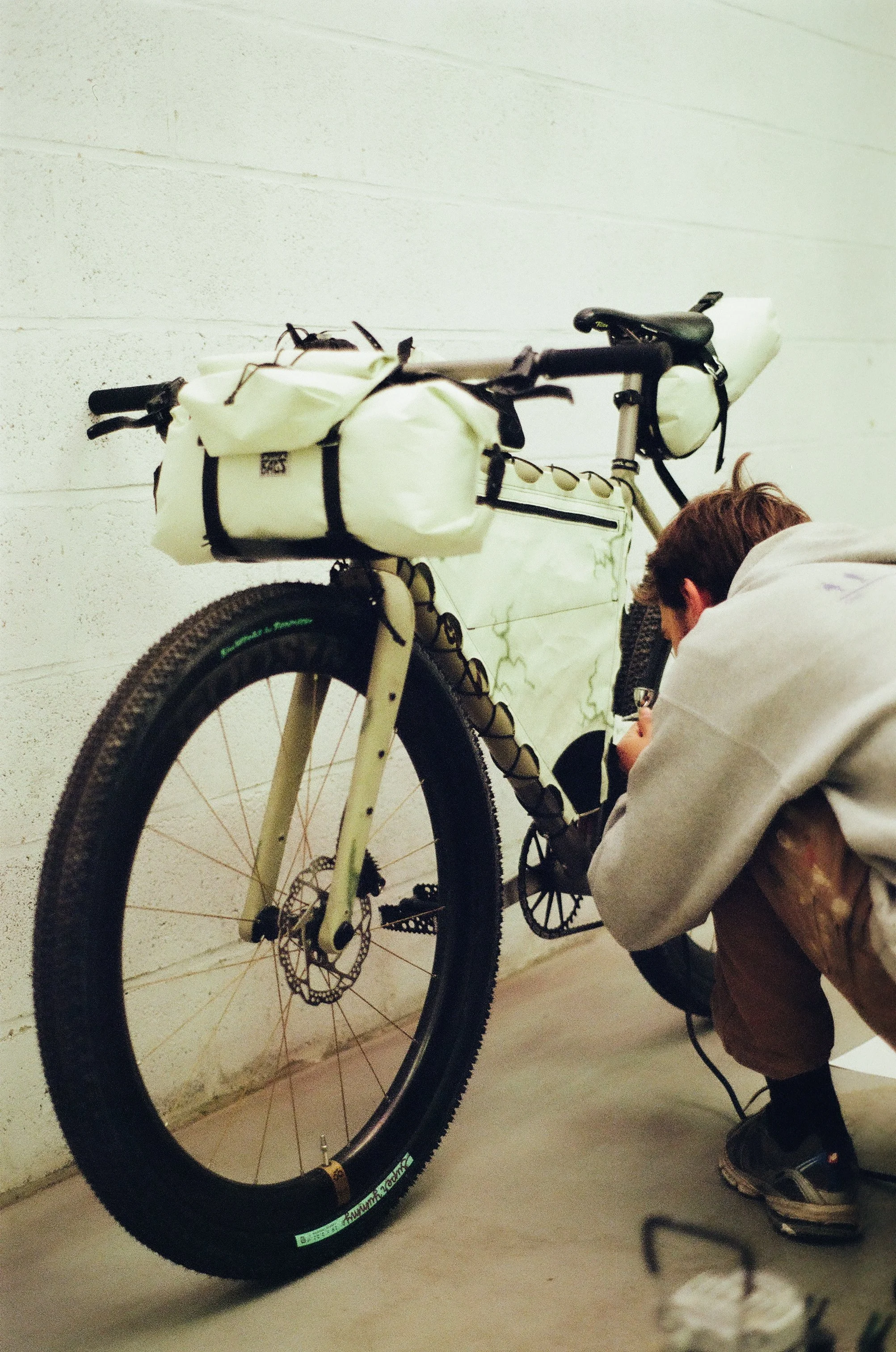
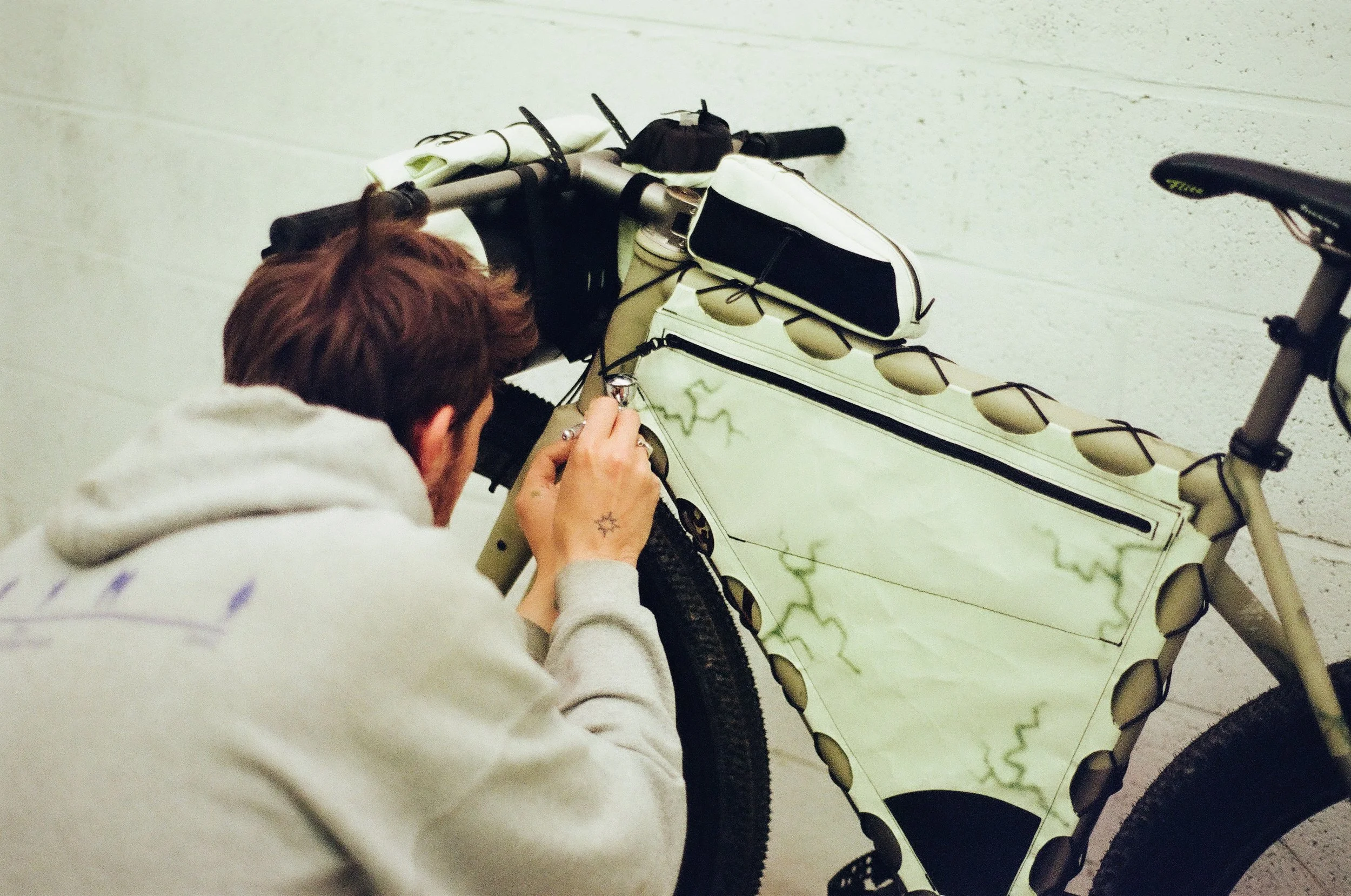
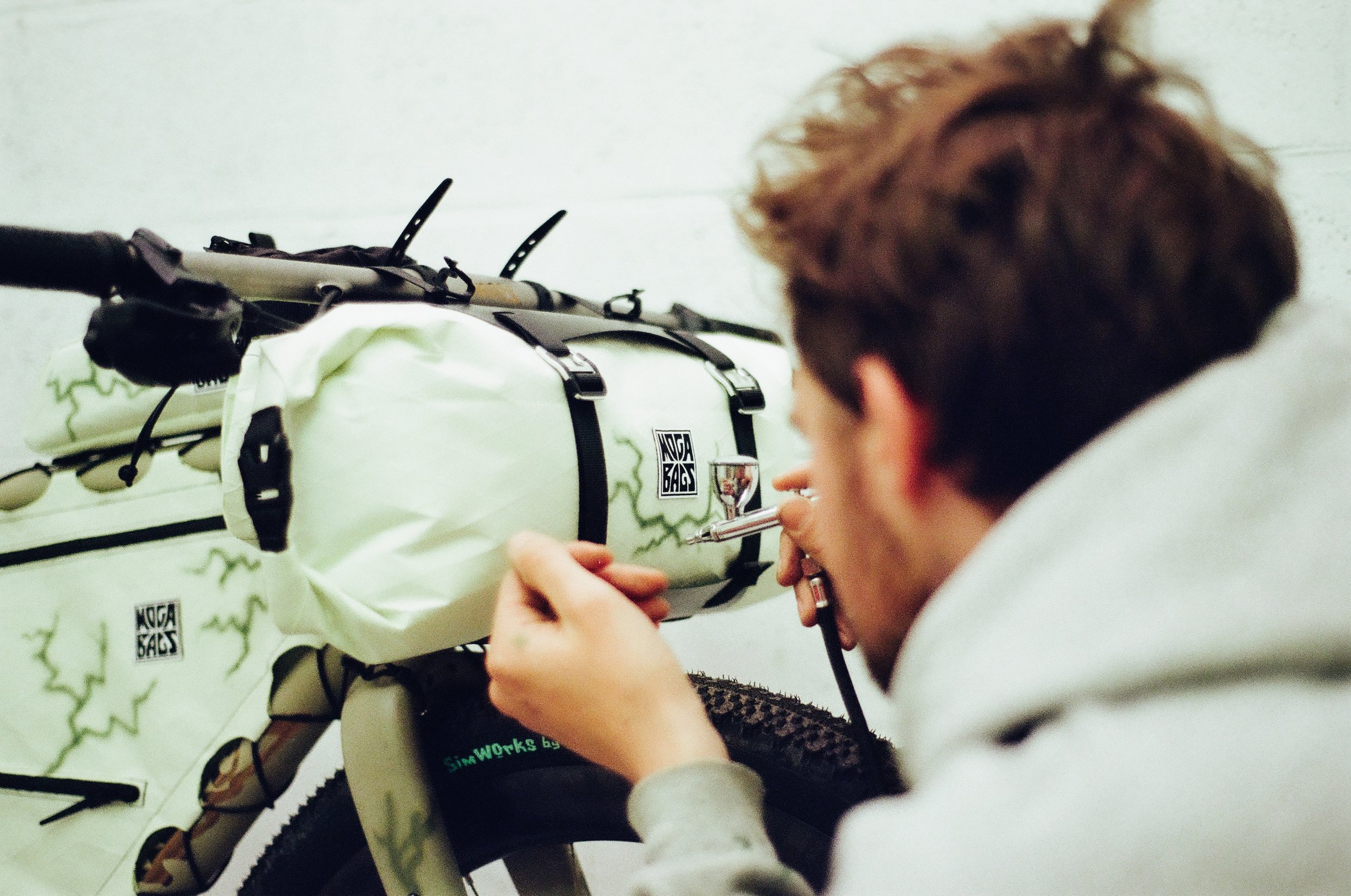
My overall experience with the full setup, which includes the full frame bag, saddle bag, front burrito bag, additional “Moga Carry” strapped on over it, top tube bag, and feed bag, has been pretty much flawless so far.
Every zipper is weatherproof, and even the few seams that remain within the bags have been fully waterproofed as well. That’s partly thanks to a construction technique George has been developing, allowing him to create bags with as few seams as possible through very minimalist pattern work. It not only gives the bags a cleaner and more refined appearance, but also greatly improves their resistance to the elements.
And beyond the aesthetics, all the practical features you’d expect from a proper bikepacking setup are there. The feed bag, for example, can be fully operated with one hand while riding, which quickly becomes one of those small details you end up appreciating constantly once you’re actually out on the bike. The frame bag can also be fitted with an optional internal divider, allowing you either to compartmentalize your gear or keep the entire interior as one large open space depending on your needs.appearance but
I’ve also been really enjoying the harness system used for both the burrito bag and the saddle bag, making the install and removal of the bags incredibly quick and straightforward. And that is something you appreciate even more while traveling or constantly moving between rides, trains, hotels, and airports. The frame bag, on the other hand, is fully laced directly around the frame so that one is essentially staying in place permanently .
Now, I could go on and break down every single detail of each component in this setup, but honestly, it all pretty much comes down to a few simple things: everything fits incredibly well, the bags have been extremely durable so far, and the overall weather resistance has been more than reassuring through actual use and travel.
But where I really want to direct your attention is the tailor-made aspect of this entire project. George truly went above and beyond with this setup, not because this was technically a press project that was going to receive media coverage, but because, through our conversations, I genuinely understood how much he loves creating fully custom bag sets with real personality and a strong visual identity that fits the bike they are made for. They even went as far as making me a custom matching wallet to go alongside the setup, which honestly says a lot about the level of care and enthusiasm behind the whole project.
And while the entire process took a couple of weeks from the first discussions to the finished result, I genuinely couldn’t be happier with how everything came together. The setup not only works incredibly well from a practical standpoint but also manages to visually elevate the bike in a way very few accessories actually do.
People like George, who are constantly pushing the boundaries of what we think is aesthetically possible on a bicycle, deserve to be far more visible within the cycling industry. There’s a real craft, vision, and personality behind projects like this, and I hope these images manage to communicate at least part of that.
We may or may not have a full custom Moga setup lined up for a raffle soon…
🛍️: @moga.bags
📷: Nikon F100
🎞️: kodak Color Plus 200
📍: Brussels