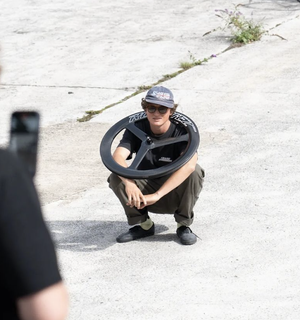
Alonukis: Framebuilding High in the German Alps
On one of my trips through Germany, I had the chance to meet Johannes after spotting one of his bikes at Bespoked Dresden 25. Based in the Northern Alps, near the border between Germany and Austria, Janis welcomed me into his workshop and gave me a tour while we exchanged a few words about his background as a framebuilder.
Being a framebuilder in your twenties, working in the middle of nowhere, is definitely something I could have dreamed of myself, so I wanted to learn more about the hows and whys that brought him there.
Paul - Alright! I guess we can start with a small introduction.
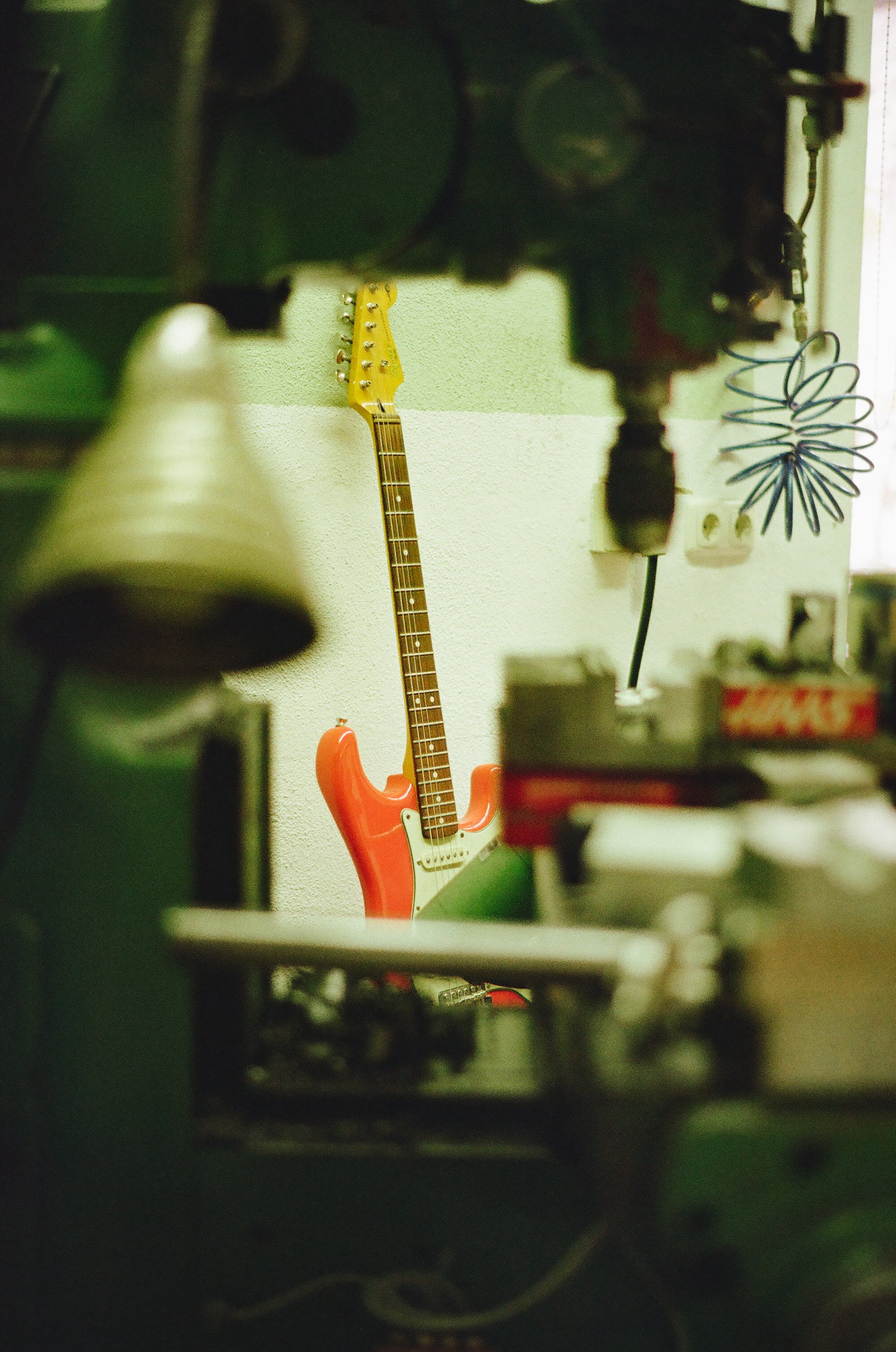
Johannes - Sure! I’m Johannes, I’m 24 years old, and I got into framebuilding after studying woodworking, because yes, I’m actually a carpenter by trade. But working with machines has always been one of my favorite things, so making the step from wood to metal wasn’t such a big deal.
It all started because I wanted a cargo bike. Then I saw the prices… and I definitely couldn’t afford one. So I went online, looked up how much a brazing torch cost, and I still own the same one to this day! €150 later, with no jig and a bunch of tubing ordered online, I built my first cargo bike. And here I am, four years later, deep in the rabbit hole that is framebuilding.
I guess you started with steel, but now you mainly work with titanium. How was the jump from one to the other?
Honestly, the biggest difference is just the price. Titanium is so expensive that if you mess up a weld, it becomes a real problem, but after building a few steel frames, the step felt very natural. I actually already had all the tools you need for titanium, so building a Ti frame wasn’t that big of a leap in the end.
Mostly, though, welding titanium just feels more natural to me. The filler rod almost magnetically pulls itself into the weld, and the process feels meditative, like everything works on its own… At least that’s how it feels to me! I really enjoy building Ti bikes, especially when I can work with additive manufacturing like 3D-printed titanium lugs, which simplify the process tremendously. It also helps me stay realistic: with 3D-printed parts, I can just cut tubes to length and weld without having to rework them too much. That makes the process faster for me and cheaper for the customer.
At this point, if a detail doesn’t improve ride quality or the customer’s experience, I try to eliminate it. It’s like a stone smoothed by a river; it has its shape because it needs to, in its simplest and most natural form.
So, would you say your approach to frame building is kind of straight to the point with no extra?
Well, yes, but it can feel a bit intimidating when I display my bikes at bike shows, for example, because they’re just clean and minimal. There aren’t any flashy details to immediately catch your eye.
On the other hand, this simplicity is exactly what many of my customers want. Rather than building something trendy that will eventually feel dated, my real goal is to create something timeless. You can’t get bored of it, because raw is just raw. No flashy colors, no gimmicks, nothing to grow tired of.
What’s the biggest hurdle as a small framebuilder like yourself?
Titanium is just so expensive across the board. My 3D-printed parts come from Spain, most of the tubing comes from Asia, and the material cost alone is a huge investment. That’s mostly why titanium bikes end up being so expensive.
So tell me about this bike you showcased at Bespoked this year.
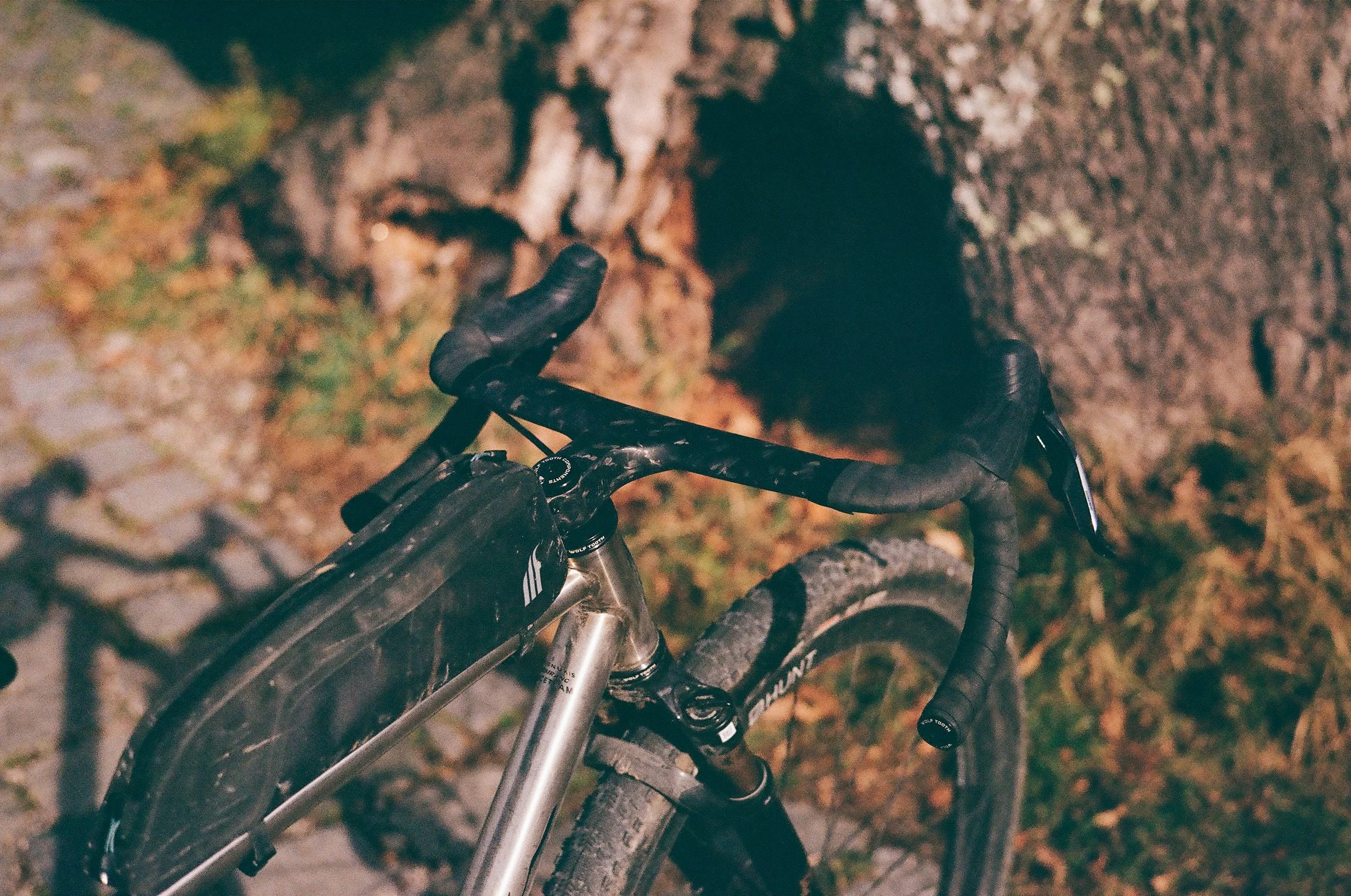
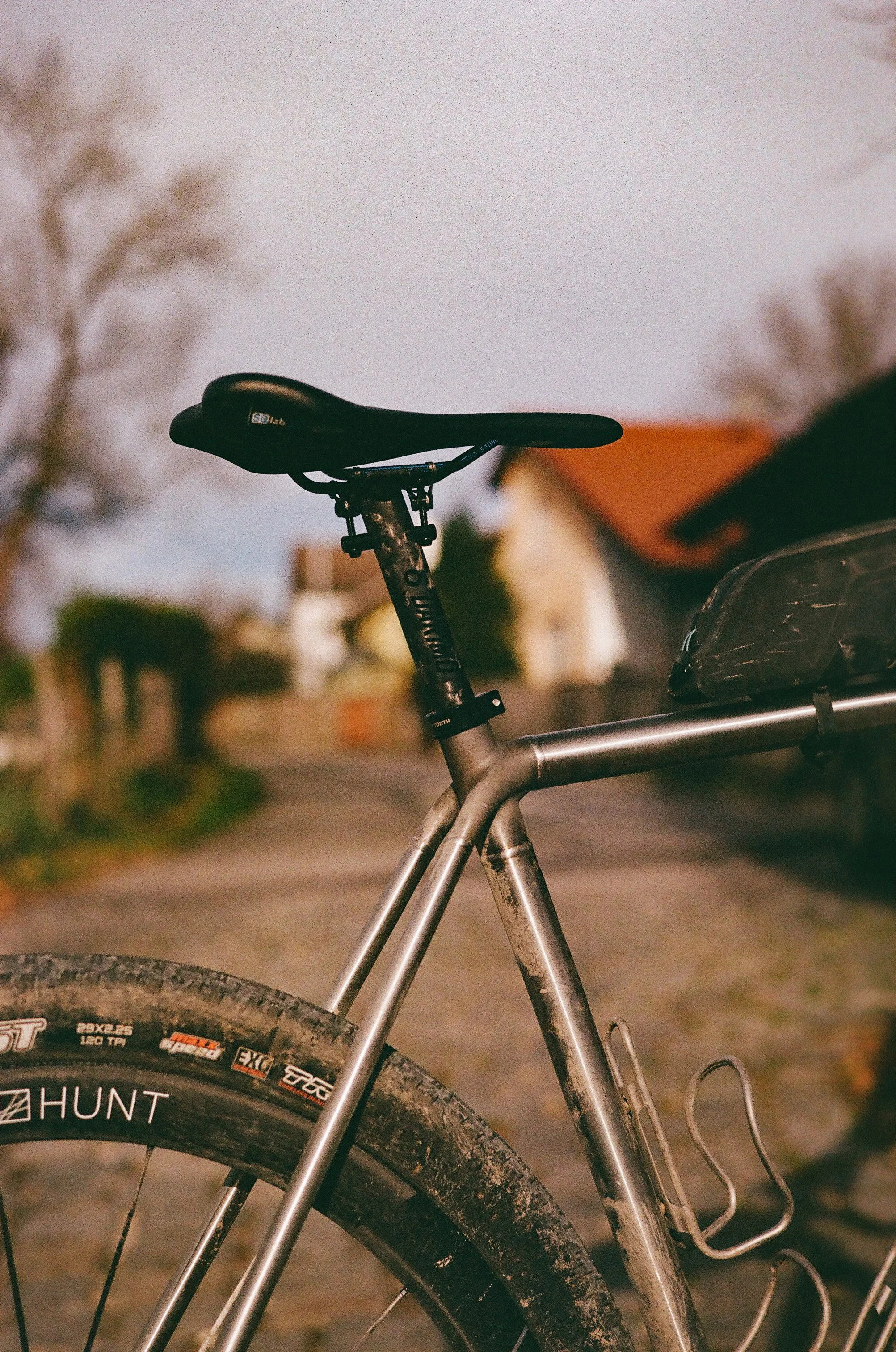
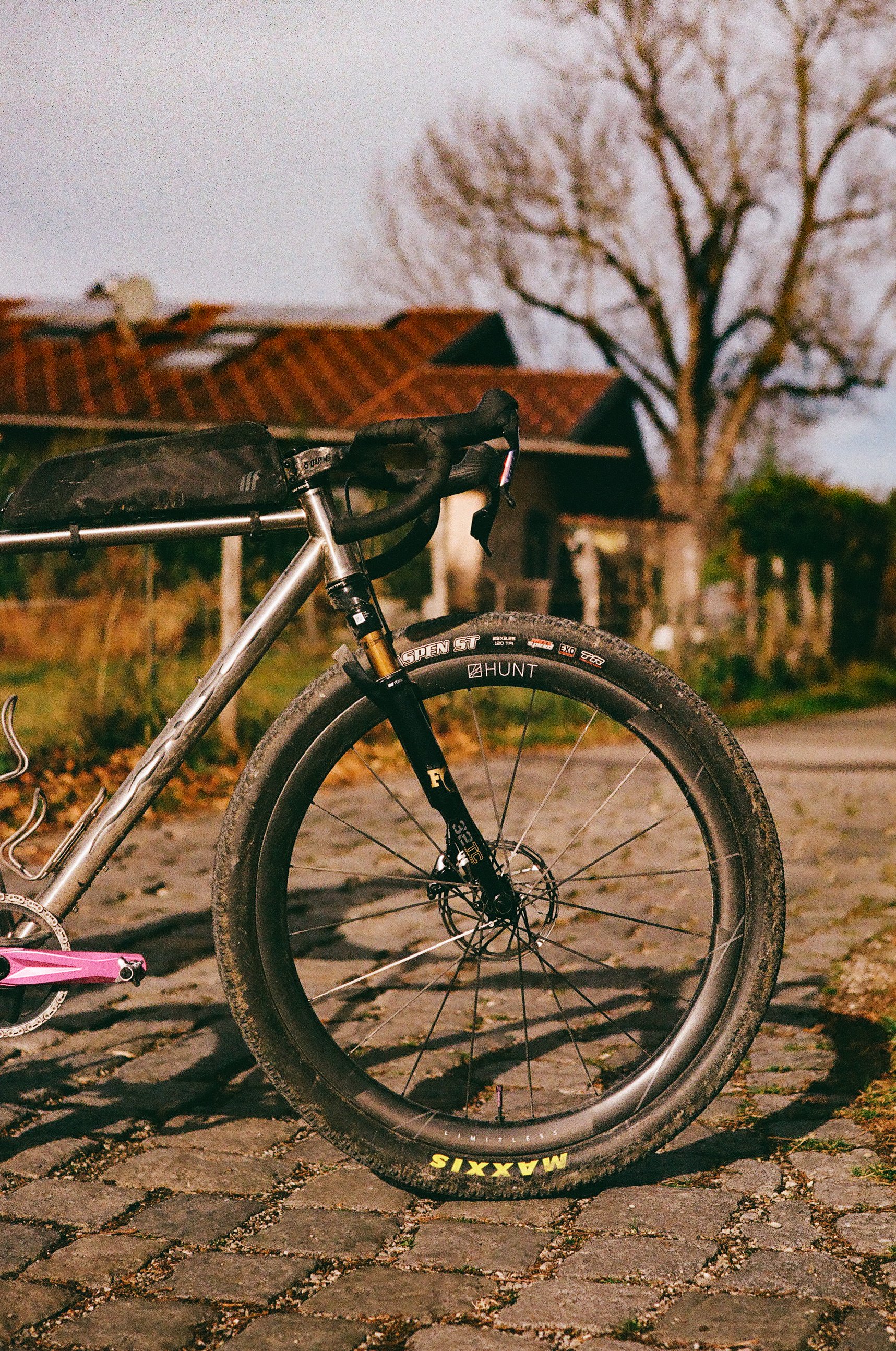
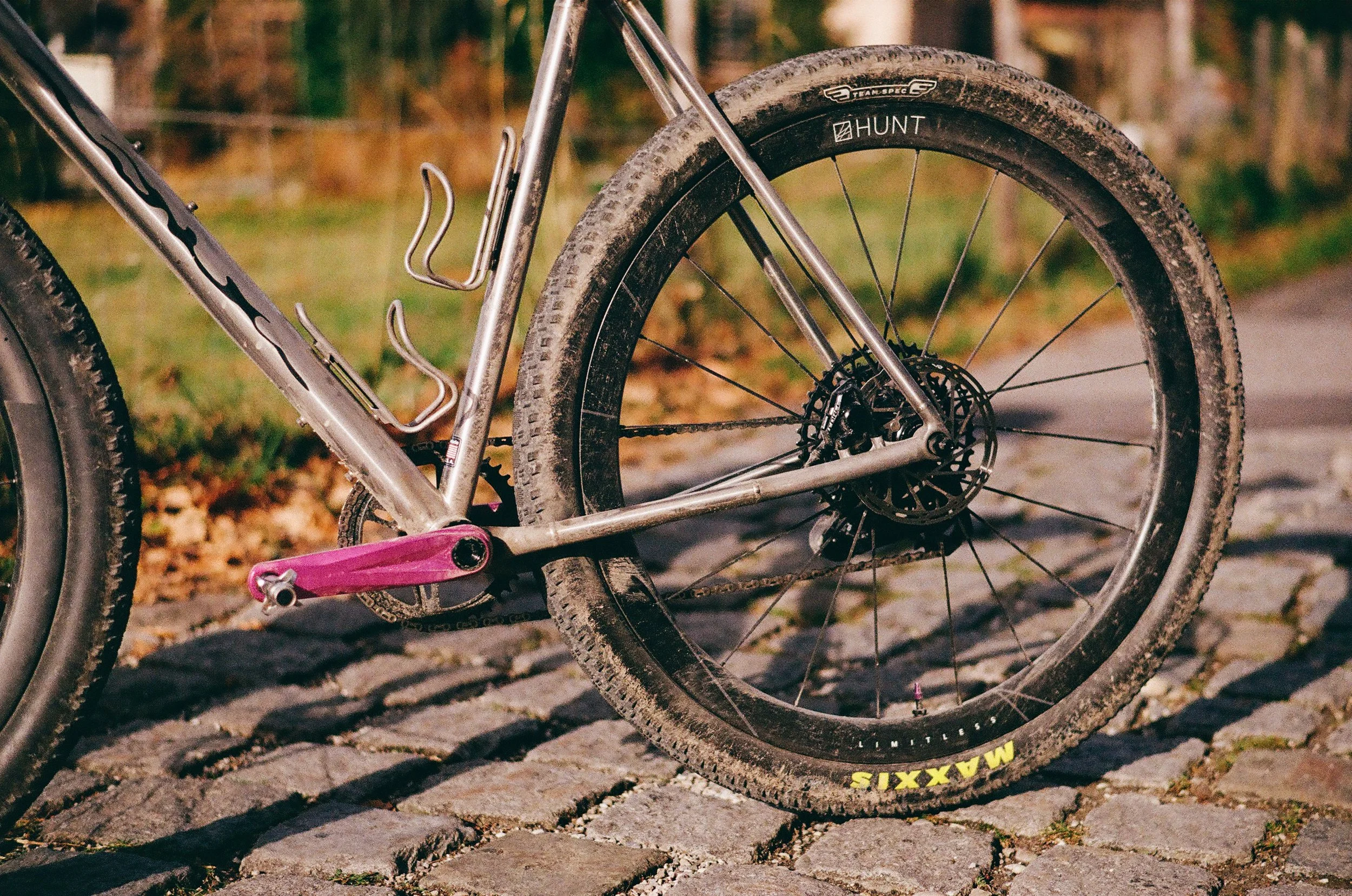
Yes! The concept behind this bike was to create a fast gravel bike, but one that really excels on downhills. It has a very progressive geometry and is probably the most modern thing I can do right now. It still doesn’t have a name, but I’m working on it.
Is it something we’ll be able to buy in the future?
Yes, but I don’t do complete bikes, only framesets. This one will be available, but it’s also important to note that I don’t work with stock geometries. Every piece is unique, and I only do 100% custom work.
Detailed Parts List
Frame and Fork
Alonukis Ti Gravel, Fox 32 TC 40mm
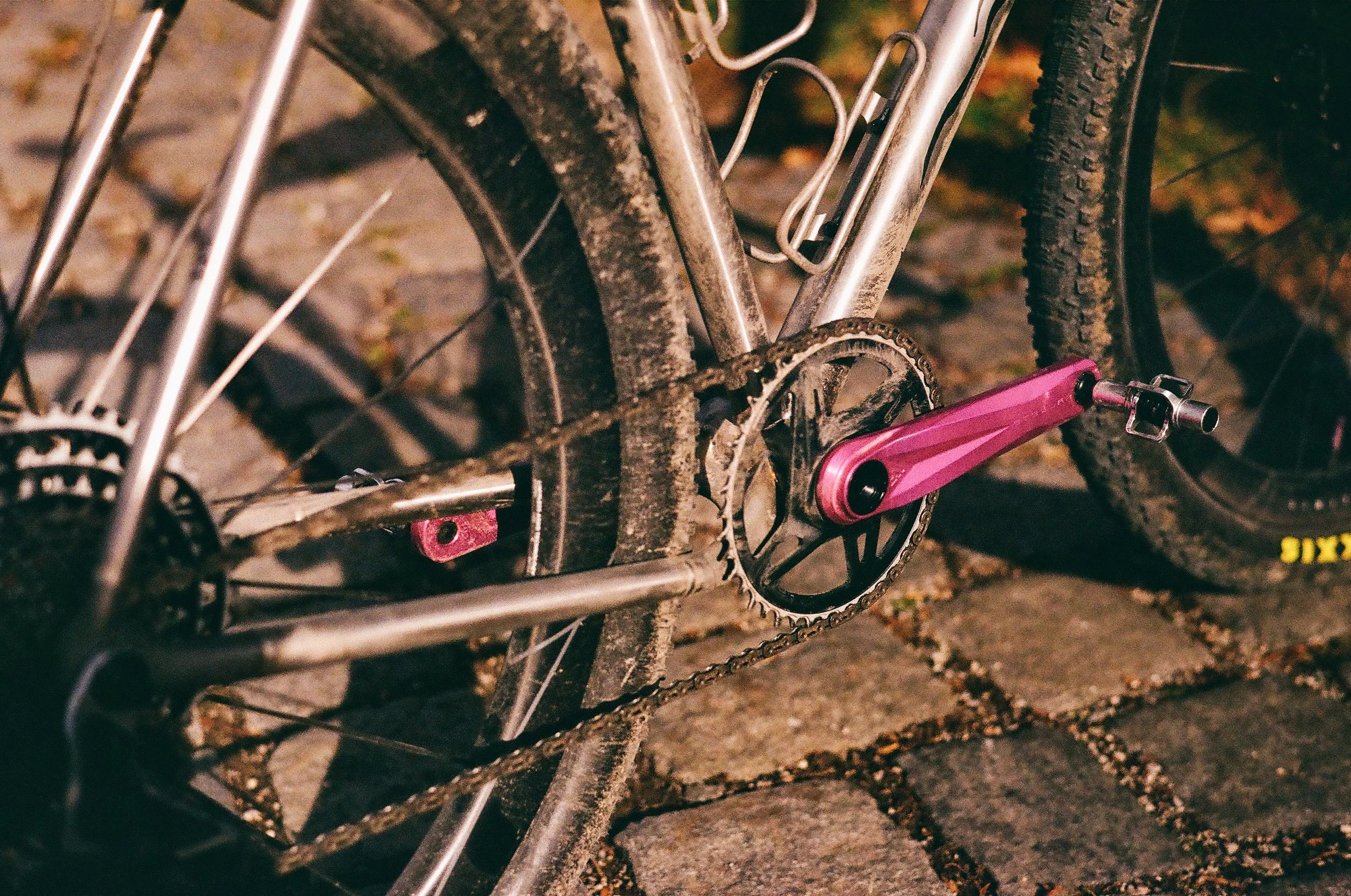
Groupset Sram force XPLR
Crankset
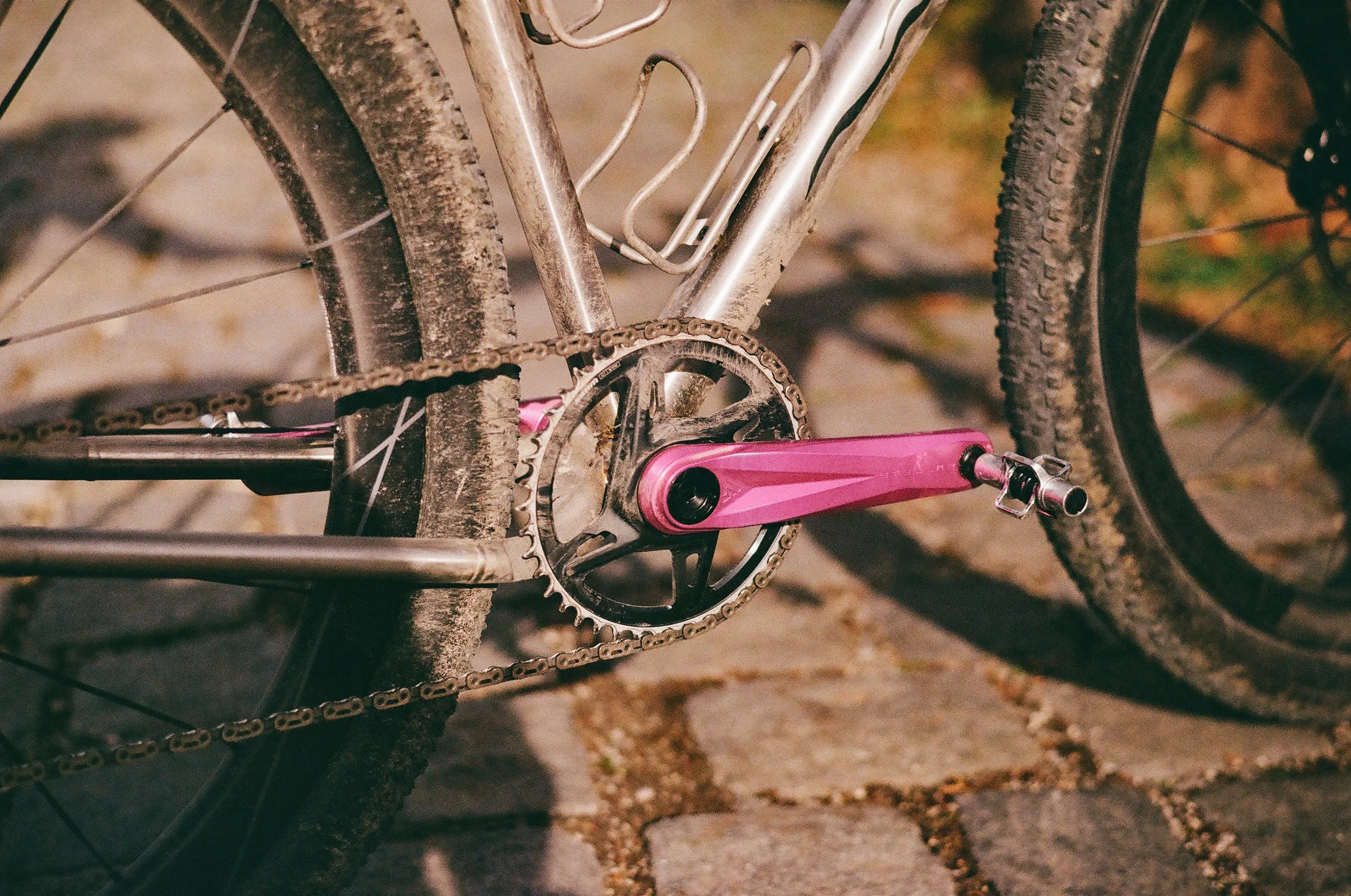
Alugear Stellar
Seatpost and Saddle
Darimo Seatpost, SQ Lab Saddle
Handlebar
Darimo integrated combo
Wheels
Hunts 50 Limitless with carbon spokes
Ok, maybe a final question: Where does the name “Alonukis” come from?
Alonukis? It’s actually quite simple. My middle name is Nikolaus, so the name is just an anagram of that. But for some reason, people think it’s an island in Greece, or a language, or even a planet… which leaves room for interpretation.
The funny thing is, it starts with an “A,” so I always end up listed at the top at trade shows, though I didn’t plan that at all. Kind of a happy accident.
Is there anything you’d like to add for this interview?
Of course! I think my framebuilding is very much inspired by what’s happening in the U.S., because people there are so open about what they do and how they do it. And I think that’s also why I love collaborating so much.
For example, the 3D-printed lugs were made in tandem with James Gerard from Creature Cycles. Or the fact that, even though I make my own bags, I love working with other bag makers too.
Finally, I get a lot of questions about the logos. Since I’m such a small company, I don’t need a recognizable logo, and there’s a lot of value in being able to change it from bike to bike. It gives the customer room to interpret their own feelings. A logo doesn’t have to be just clean lines on a downtube; it can play with perception, and I love that.
Framebuilder in the mountains just sounds great!
🎞: Kodak Color Plus 200
📷: Leica M6
📍: Murnau am Staffelsee