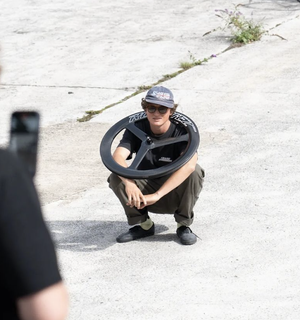
The Shape of Balance, with Equilibrium
Back in January, I finally had the chance to meet Vladimir also known as Vlad from Equilibrium. As the maker behind some of the most desirable titanium frames out there, he took the time to walk me through his story and share his vision of framebuilding. If you’re a frequent reader here and understand how I believe a bike should feel, you’ll quickly see why I was so eager to sit down and interview him.
Paul- How long have you been in Japan, and how long have you been building frames now?
Vladimir - I’ve been here for about 15 or 16 years now, as I moved to Tokyo in 2009. At the time, I was living in London with my girlfriend, who is Japanese. We had met there a few years earlier, but her visa expired, and London was also starting to feel a bit rough, not that pleasant to live in for me, and less comfortable to move around, even by bike. I didn’t see myself building a future there, so coming to Japan made sense. As for bikes, I’ve been building frames for over a decade now, around 12 years to be precise.
What was your relationship with bikes back then?
I was riding a lot, mostly fixed gear. I always had a few bikes going at the same time, building, swapping parts, experimenting, and London had such a strong scene at the time that it was easy to find a pub and see dozens of bikes outside with messengers everywhere. That energy really pulled me in.
Do you remember your first bike?
Yeah, it was a steel road bike, Reynolds 531 tubing. I converted it to a single speed later, but I first rode it with gears. I was commuting about 80 kilometers every day. And that’s when I started noticing fixed gear bikes and thinking they were something special. I think it’s also around that time that I thought about building bikes myself. Seeing those slim steel frames made me want to build one from scratch, but I had no idea how to begin. In London, there were courses, but the waiting lists were two or three years long, so it didn’t really feel accessible.
So did it actually start in Japan instead of London then?
Well, at first, I was restoring vintage bikes, importing them from Europe, fixing them up, and selling them here. Then one day I found a small workshop while walking my dog. It was packed with frames, the kind of place you only see around here. I met the builder, Ohtaki-San, and we became friends. I told him I wanted to learn, and he just said he could show me. The whole apprenticeship was very short! We built two or three frames together, and he explained the basics. After that, I bought my own tools: a torch and gas and started practicing at home. I’d bring him my work, and he’d give feedback. It was very direct, very hands-on.
So how old were you when you started?
Around 35, which is later than most other frame builders, but I actually see it as an advantage. I feel you need maturity to build something meaningful. If you start too young, you might have the technical skills, but you don’t have a story yet. For me, building frames is not just about constructions; it’s about expressing something.
What is that “something” for you?
Balance. That’s what Equilibrium stands for. Not just balance in geometry, but in the whole experience. The bike shouldn’t fight you or demand attention. It should disappear and work with you, naturally.
How does that translate into your bikes?
I try to avoid extremes. No aggressive, twitchy behavior. I smooth everything out so the ride feels intuitive. The goal is that you don’t think about the bike. You just ride, and everything flows.
You worked with different materials before focusing on titanium. How did that evolve?
I started with steel, then moved into stainless steel a few years in. Stainless felt amazing, very smooth, and very responsive, but it was difficult to work with. Welding was tricky and unpredictable. As for Titanium, it came later, mostly out of curiosity, but it immediately stood out for its incredible versatility. It’s responsive, comfortable, and reduces fatigue on long rides. Plus, of course, it doesn’t rust, which is a big advantage over steel. From a practical standpoint, it also makes more sense; people tend to understand titanium immediately, while stainless requires a lot of explanation.
Was there also a strategic reason to focus on titanium?
Yes. In Japan, there are very few titanium builders. Most work with steel and brazing, and trying to compete with someone who has 40 years of experience in that field didn’t make sense. I needed to find my own space here in Japan, and titanium was a perfect solution for that.
You’re also known for using 3D-printed lugs. When did that come in, and what does it bring compared to traditional methods?
About five years ago. At first, it was just experimentation, testing ideas with friends, but in the last couple of years, the technology became reliable enough for real use. Now it’s a big part of my process. As for that it brings: better control over alignment, less distortion during welding, and much more design freedom. Titanium moves a lot when you weld it, so having these pre-formed structures helps keep everything stable.
Would you say you’re more interested in innovation than tradition?
I’m interested in the process. If I repeat the same thing, I get bored. I want to explore, test ideas, and see where they go, even if it’s risky. It’s that initial “discovery” that exited me the most. That moment when everything clicks. You don’t always know how it will end, and that’s what makes it interesting.
Do you ever feel pressure to standardize or scale your work?
Not really. I’ve thought about it, but it doesn’t suit me. The more you scale, the more you deal with deadlines, emails, and management. I feel like you lose the part that actually matters. So I’d prefer to stay small. I’m not a good businessman, and I don’t want to be. I enjoy building, not managing people or running a large operation.
You were saying that you started with fixed gear, does that still influence you today?
Definitely. Fixed gear is pure freedom. You just go outside and ride. No planning, no equipment, no pressure, and it’s very different from road cycling today, which has become more complex and performance-focused. And I know you’re going to ask me if I’ll build track bikes again… The answer is, for me, yes. Just something simple to ride around the city and clear the mind. Because that’s what fixed gear is about for me.
If you did, would it be simple or experimental?
That’s a difficult question. If it’s for myself, probably simple. But if it’s for the brand or a collaboration project, you have to think about pricing, positioning, and expectations. Sometimes keeping things simple is harder than adding features.
What keeps you motivated after all these years?
The need to keep evolving. The attitude stays the same, but the methods change. If I stop pushing forward, then there’s no point. For me, it’s about personal development as much as anything else.
That’s it for this interview. A huge thank you to Vlad for taking the time, and for letting me try two of his road bikes, both of which were truly incredible experiences.
It’s about ballance
⚖️: Equilibriumcycleworks.com
🎞: Kodak Color Plus 200
📷: Leica M6
📍: Tokyo